


The 5-Minute Rituals That Help Kids Find Calm (Even on Chaotic Days)
- FlippyTales

- Nov 10, 2025
- 7 min read
There's this moment that happens in homes everywhere, usually around 7 PM.
A child is melting down over something that seems small from the outside—a broken crayon, a sock that feels "wrong," homework that's too hard. But from the inside? Their nervous system is maxed out. The day has been too loud, too fast, too much.

And the parent or caregiver stands there thinking: How do I help them come back down?
We hear this story all the time. Not because kids today are "too sensitive" or "can't handle things." But because their worlds are genuinely overwhelming. Between school pressures, social dynamics, screen time, and the general speed of modern life, kids are carrying a lot.
The good news? There are simple, playful ways to help them find their ground again. Not through another app or reward chart. Through tiny rituals that reconnect them with the present moment.
That's what mindfulness really is. Not sitting cross-legged on a mountain. Just... coming back to now.
Let's talk about how.
Why This Matters (More Than You Think)
Here's something that surprised us when we first dug into the research: Mindfulness isn't just a nice-to-have. It actually changes how kids' brains develop.
Dr. Richard Davidson at the University of Wisconsin has spent decades studying how meditation and mindfulness affect the brain. His work shows that these practices strengthen areas responsible for attention, emotional regulation, and empathy. The brain literally rewires itself in response to these practices.
Think about that. We're not just helping kids feel calmer in the moment. We're helping them build neural pathways that will serve them for life.
A major review of mindfulness programs in schools found that kids who practiced simple mindfulness techniques showed significant improvements in attention, stress resilience, and cognitive performance. They were better able to focus, bounce back from setbacks, and manage big emotions.
But here's what we love most: These changes don't require hours of meditation. They start with minutes. With breath. With noticing.
Tuko, our little Earth guide, knows this instinctively. He doesn't rush. He doesn't force. He just gently invites kids to pause and notice what's right in front of them.
Five Rituals That Actually Work (No Perfection Required)
1. The Noticing Game (Tuko's Favorite)
This one's genius because kids think it's just a game.
Pick a moment—could be in the car, at the dinner table, before bed—and say: "Let's play Tuko's Noticing Game. Can you find..."

5 things you can see (a cloud, your favorite stuffy, the way light hits the wall)
4 things you can touch (smooth, bumpy, soft, cold)
3 things you can hear (birds, the fridge humming, your own breathing)
2 things you can smell (dinner cooking, fresh air)
1 thing you can taste (a sip of water, the last bite of an apple)
That's it. Five minutes, max.
Why it works: This pulls kids out of anxiety (which lives in the "what if?" future) and grounds them in the here and now. It's a reset button disguised as a scavenger hunt.
We've heard from teachers who use this after recess to help kids transition. From parents who play it in the waiting room at the doctor's office. From caregivers who try it when bedtime feels impossible.
And it works because it's not about forcing calm. It's about shifting focus.
2. Breathing Like It's Magic
Deep breathing is wildly effective. It's also wildly boring to explain to a six-year-old.
So we don't explain it. We turn it into something tangible.
The Bubble Breath:Give them a bottle of bubbles. Ask them to blow the biggest, slowest bubble they can. Deep breath in through the nose. Slow, steady breath out through the mouth.
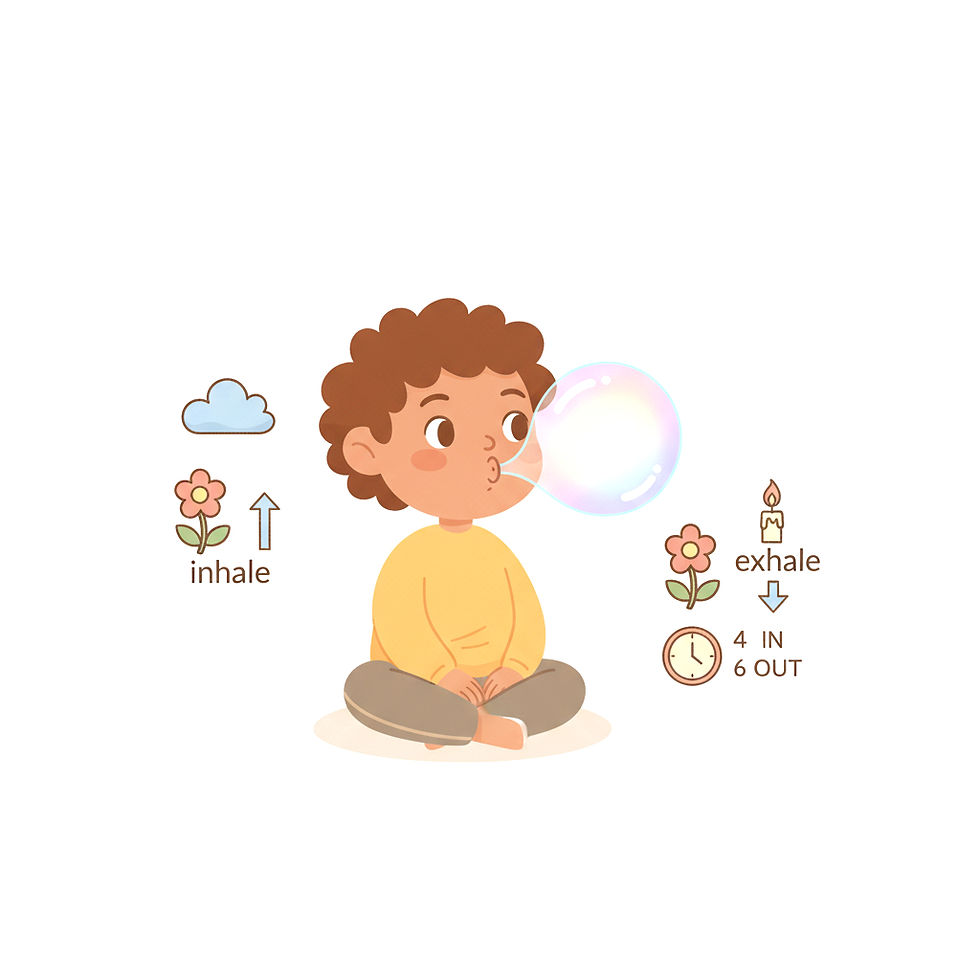
They'll do it again and again, trying to make the bubbles float. And meanwhile? Their nervous system is downshifting from "fight or flight" into "safe and calm."
Research on breathing exercises shows they activate the parasympathetic nervous system—the body's natural brake pedal. Heart rate slows. Shoulders drop. The internal alarm stops blaring.
No bubbles? Try these:
Smell the flower (deep breath in), blow out the candle (slow breath out)
Breathe in for four counts, out for six
"Dragon breaths" (big inhale, slow exhale with a hissing sound)
The magic isn't in the method. The magic is in the repetition. Every time a child practices intentional breathing, they're building a tool they can reach for when life gets hard.
3. Gratitude That Doesn't Feel Forced
Gratitude gets a bad rap because it's often positioned as toxic positivity. Just be grateful! feels dismissive when a kid is genuinely struggling.
But real gratitude? The kind that notices small sparks of light even on hard days? That's powerful.
Studies by Dr. Robert Emmons and others have found that regular gratitude practices lead to significant improvements in happiness, sleep quality, and overall well-being. Kids who practice gratitude show better attitudes toward school, stronger relationships, and improved mood.

But here's the key: It can't feel like homework.
Instead of forcing a nightly "what are you grateful for?" interrogation, try this:
At dinner or bedtime, share one small good thing from your day. Model it first. "I'm grateful I got to see that cardinal this morning" or "I'm grateful for this cozy blanket."
Then invite (don't demand) them to share one thing. Maybe it's silly. Maybe it's profound. Maybe it's "I'm grateful for pickles."
All of it counts.
That's why every page of a FlippyTales journal includes a gentle gratitude prompt—not as pressure, but as an invitation. Today I'm grateful for... with space to write, draw, or just think.
It's treasure hunting for the good stuff. And over time, kids get better at spotting it.
4. The Body Check-In
Most kids have no idea they're walking around with tension in their shoulders, clenched jaws, or tight bellies. They just know they feel "bad" or "weird."
This ritual teaches them to tune in.
Lie down or sit comfortably. Take them on a gentle tour of their body, starting at the toes.
"Check in with your toes. Are they wiggly? Tired? Warm?"
Move up slowly. Legs. Belly. Chest. Arms. Shoulders. Face.
"How does your belly feel? Soft or tight? What about your shoulders—are they up by your ears or relaxed?"
No judgment. No fixing. Just noticing.
Sometimes kids discover they've been holding stress they didn't even know was there. And just the act of noticing it often helps it release.
This is especially helpful after a tough day at school, before bed, or when emotions are running high but the words won't come.
5. One Minute of Just Listening
This sounds almost too simple to work. But it does.
Set a timer for one minute. Close your eyes (or look down). Just listen.
What do you hear?
Afterward, share. The clock ticking. A dog barking in the distance. The wind. The sound of breathing. The quiet itself.
Dr. Amishi Jha's research on attention found that regular mindfulness practice—even just minutes a day—improves focus, working memory, and the ability to resist distraction. Kids who practice learn to direct their attention instead of being dragged around by it.
And this little one-minute listening game? It's attention training in disguise.
It's also a beautiful way to close the day. One minute of stillness before the lights go out. A moment where nothing is required except presence.
The Thing Nobody Tells You About Mindfulness
Here's the secret: It's not about getting good at it.
Minds wander. That's what they do. Especially young minds.
So when you're doing bubble breaths and your child suddenly starts talking about dinosaurs? That's not failure. That's just a mind being a mind.
The practice isn't in maintaining perfect focus. The practice is in noticing when focus drifts... and gently coming back.
Again. And again. And again.
That "coming back" is the exercise. It's like a bicep curl for attention.
Researchers call this cognitive flexibility—the ability to shift focus, let go of distractions, and return to the present. It's one of the most important life skills a person can develop.
And it starts with being gentle with ourselves when we wander off.
Tuko gets it. He's still learning too. His light flickers sometimes. His attention drifts. But he always comes back. And that's what makes him such a good guide.
How to Make These Rituals Stick (Without Adding Pressure)
Let's be real: One more thing on the to-do list is the last thing anyone needs.
So don't think of these as tasks. Think of them as moments.
Attach them to something you already do.
Bubble breaths before bedtime
The noticing game in the car ride home
Body check-in during tuck-in time
One minute of listening before dinner
Gratitude while brushing teeth
Keep them short. Two minutes beats zero minutes. Always.
Model it yourself. When kids see adults pause to breathe or notice something beautiful, they learn that this is just what people do.
Celebrate trying, not perfecting. "I love that you tried that" matters so much more than "good job staying focused."
Use tools that make it easier. Like journals with built-in prompts. Like Tuko guiding the way. Like pages that say you matter without making it complicated.
That's the whole reason FlippyTales journals exist.
Why We Built Journals Around This
When we created FlippyTales, we kept coming back to one question: What do kids really need?
Not more pressure. Not more perfectionism.
They need space to be themselves. To notice how they feel. To celebrate small wins. To know that their thoughts and experiences matter.
So every FlippyTales journal includes:
📖 Daily gratitude prompts that feel like treasure hunts, not chores
📖 Emotion check-ins with a guide that helps kids name what they're feeling
📖 Habit trackers that celebrate effort, not perfection
📖 Free creative space for drawing, doodling, dreaming
📖 Tuko's monthly stories woven with emotional wisdom and Earth magic
It's not just a journal. It's a gentle companion. A place where kids learn that their inner world is worth paying attention to.
And here's what we've seen happen: Kids who journal regularly become better at noticing their emotions before they explode. They develop language for their feelings. They build resilience, one page at a time.
Because that's what mindfulness really is. Not emptying the mind. Filling it with awareness, kindness, and presence.
Your Next Five Minutes
Tonight or tomorrow, or whenever feels right, try just one of these rituals.
Maybe it's bubble breathing before bed.Maybe it's the noticing game on the way to school.Maybe it's opening a FlippyTales journal and asking, "What's one tiny good thing from today?"
Start small. Start messy. Start wherever you are.
Because here's the truth: You don't need to be a meditation expert to help a child find calm. You just need to be willing to pause with them. To notice with them. To breathe with them.
And Tuko? He'll be there too. Cheering from every page, reminding your child (and you): You are the magic this world needs.
One breath. One moment. One day at a time.
Ready to start?
With muddy footprints and sparkling seeds,
The FlippyTales Team 💚


Comments